Choices of Layouts for Small Readings
Decoding the Thoth: A Guide to Four Powerful Tarot Layouts
In the world of the Thoth Tarot, reading cards is less about fortune-telling and more about understanding the interplay of elemental and spiritual forces.
Because the Thoth deck is so deeply rooted in the Kabbalah and Western hermeticism, the layouts we use must be more than just "Past, Present, and Future." Use the following quick guide to choose your small tarot reading for a quick and concise response.
Choosing Your Tool
- Use the Norphan 3-Card for quick, logical resolutions to a specific conflict.
- Use the Thoth Trinity to align your daily actions with your Higher Will.
- Use the Cross of Change when life feels chaotic and you need to see what to let go of.
- Use the Norphan Cross for deep psychological diving and "Shadow Work."
Which of these layouts resonates most with the current question on your mind? You will be able to prompt the reading further after purchase. Here is an exploration of four essential layouts designed to unlock the depth of the Thoth system.
1. The Norphan 3-Card (The Syllogism)
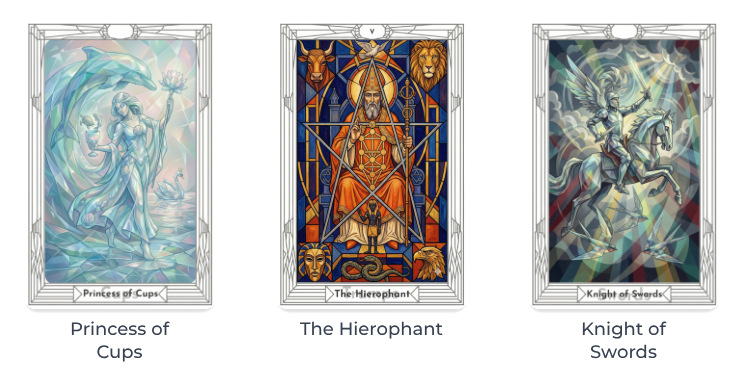
In many traditions, a three-card pull is a simple timeline. In the Thoth tradition, we view it as a Syllogism—a logical argument where two forces clash to produce a third.
- Position 1: The Thesis (The Core Nature). The raw energy of the situation as it stands.
- Position 2: The Antithesis (The Opposing Force). The "price" to be paid or the friction required for growth.
- Position 3: The Synthesis (The Integration). The alchemy that occurs when the first two forces merge into a new reality.
The Insight: This layout teaches us that conflict is not a "bad" omen, but a necessary ingredient for transformation.
2. The Thoth Trinity (The Triangle Spread)
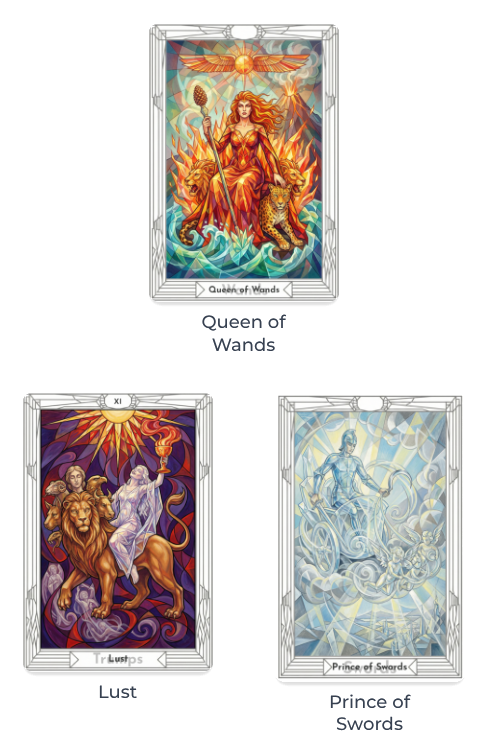
This layout honours the "Three-Fold" nature found in the deck’s major archetypes, mirroring the Supernal Triangle of the Kabbalah. It focuses on how an idea descends from the spirit into the physical world.
- The Top: The Higher Will. What your spirit or subconscious actually desires, beyond ego.
- Bottom Left: Internal State. Your intellectual and emotional landscape—the "Inner World."
- Bottom Right: Physical Manifestation. The concrete reality and external events—the "Outer World."
The Interaction: If the two bottom cards are elemental enemies (like Fire and Water), the Top card acts as the "Mediator" to resolve the internal/external split.
3. The Cross of Change (4 Cards)
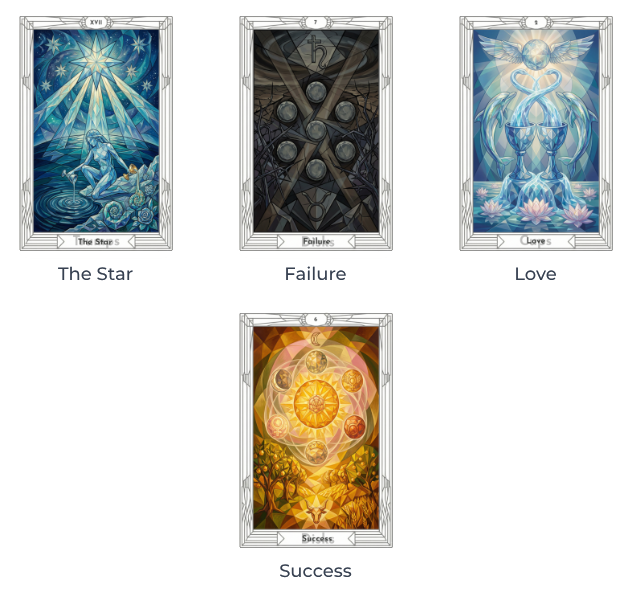
Perfect for periods of transition, this spread mirrors the Four Worlds of the Kabbalah. It provides a snapshot of a "Universe" in motion.
- The Center: The Heart of the Matter. The core spiritual lesson (Atziluth).
- The Left: What is Fading. The "Adjustment" needed; energy you are outgrowing (Briah).
- The Right: What is Emerging. The "Lust" or passion coming in (Yetzirah).
- The Bottom: The Root/Foundation. The physical stability you are building on (Assiah).
The Insight: It helps identify if your current foundation is strong enough to support the "Lust" or new energy trying to enter your life.
4. The Norphan Cross (5 Cards)
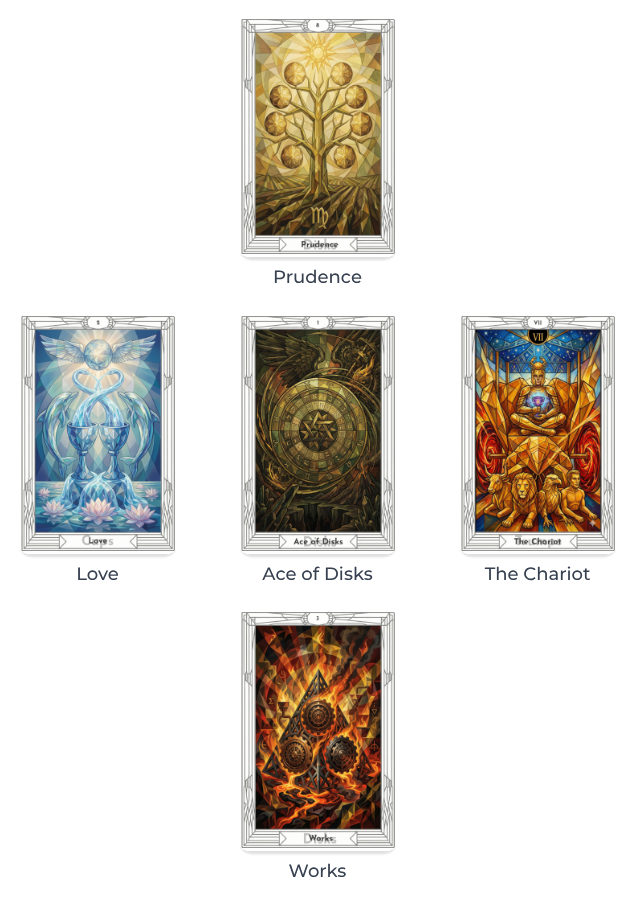
The Norphan Cross is a diagnostic tool that maps the Axis of Consciousness against the Axis of Time. It is designed to show you where your conscious mind and your "Shadow" (the unconscious) are in agreement or conflict.
- Horizontal Axis (Past → Present → Future): This is the "Tailwind" of where you’ve been and the "Headwind" of where you are going.
- Vertical Axis (Conscious → Unconscious): The "Sky" (your logic and goals) versus the "Soil" (your hidden fears and deep instincts).
The Interaction: The most powerful part of this reading is comparing the Top and Bottom cards. If your Conscious goals (Top) contradict your Unconscious drives (Bottom), the "Future" card will often manifest as a challenge rather than a victory.
You get to choose which layout to use with a drop down menu after purchase.